Same Type Rating. Different Operation.
The Hidden Cost of the A320 and A321 Mixed Fleet

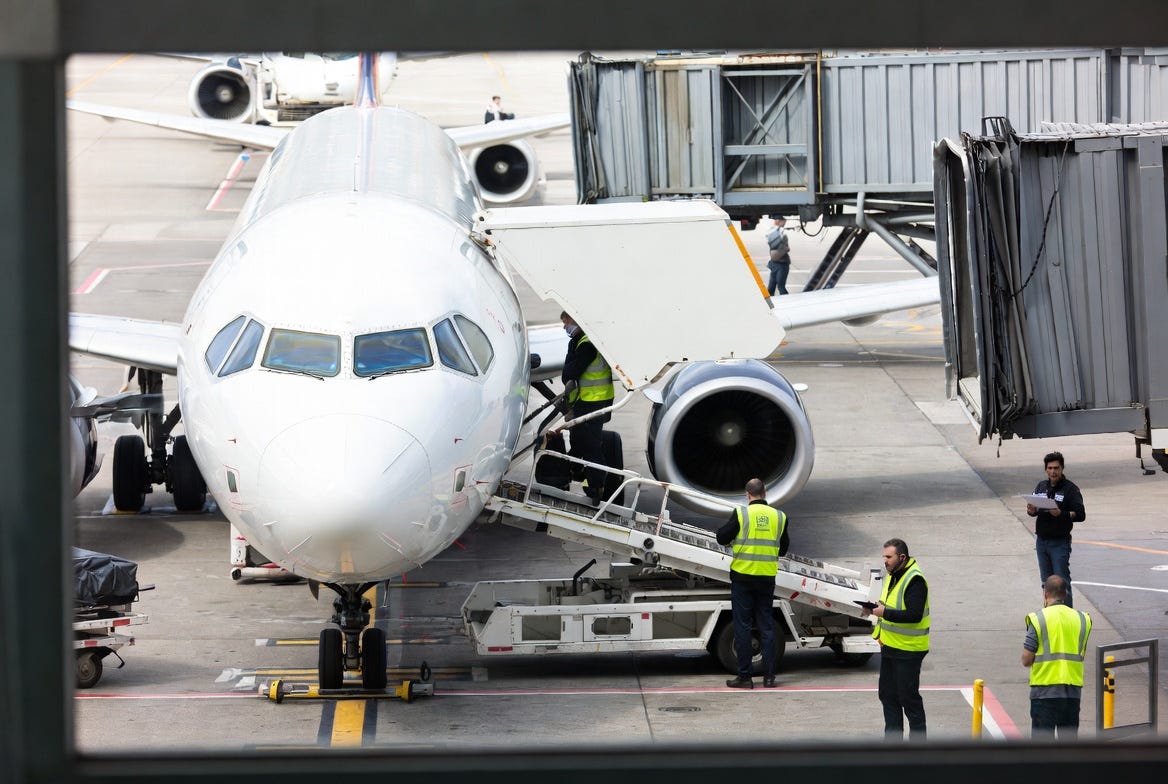
Ask any scheduler at a carrier running A320s and A321s whether the two types create a crew management problem and the answer is usually no. Same type rating. Pilots qualified on the A320 family fly both. Cabin crew trained on the A320 family work both. The fleet looks interchangeable from the qualification standpoint.
It is not interchangeable from the operational standpoint. And the gap between those two facts is where the invoice accumulates.
The Fleet That Looks Simple
A fifty-one-aircraft carrier running thirty-two A320s and nineteen A321s under EASA employs approximately 587 crew. At the publicly benchmarked full-service short-haul ratio of 5.5 pilots and 6.0 cabin crew per aircraft, that produces 281 pilots and 306 cabin crew. The crew planning challenge at first glance appears straightforward: one type rating, one rule environment, one EASA FTL framework, one roster to build.
The operational reality is more textured. The A320 carries 180 passengers. The A321 carries 220. The forty-passenger difference is twenty-two percent more revenue on the same sector, twenty-two percent more passengers to rebook if the service is disrupted, twenty-two percent more catering to position, and a different minimum cabin crew count under EASA ORO.CC.100 on services where the A320 sits at the four-crew minimum and the A321 requires five.
That last point is the one that catches small carriers by surprise. The A321 at 220 seats requires five cabin crew minimum (220 divided by 50, rounded up to five). The A320 at 180 seats requires four. A tail swap from an A321 to an A320 on a service where five cabin crew are rostered is a staffing surplus. A tail swap from an A320 to an A321 on a service where four cabin crew are rostered is a staffing deficit that requires an immediate crew addition to maintain legal compliance.
The system that tracks crew qualification does not automatically flag the cabin crew count change when a tail swap is made. The ops controller updates the aircraft registration. The crew system shows the assigned crew as legal because their qualifications are valid. The cabin crew count check is manual, performed by whoever notices the swap and thinks to check.
At a fifty-one-aircraft carrier making multiple tail swaps per day, the check is not always performed before the boarding call.
The Tail Swap That Was Legal and Wrong
A 13:45 departure was originally rostered for an A321 service with five cabin crew assigned. A maintenance event at 11:30 required a swap to an available A320. The swap was made in the ops system at 11:47. The crew system showed all five assigned cabin crew as qualified and legal. No alert was generated.
At 13:20, the gate agent completed the compliance check and confirmed the aircraft. Five cabin crew for a 180-seat A320. The service was legally over-crewed by one.
This version of the story has a happy ending. The surplus cabin crew returned to standby. The service departed on time. The cost was a misallocated crew day that produced an allowance claim and a positioning cost.
The other version happens when the swap goes the other direction. Four cabin crew rostered for an A320 service, swap to an A321 at 11:47, gate compliance check at 13:20 confirms four crew for 220 seats. One cabin crew short. The boarding hold while a fifth crew member is found and positioned: twenty-two minutes. The slot lost. The downstream rotation affected. The total cost: EUR 2,200 in direct delay plus a cascade into the 16:00 departure from the same stand.
At a fifty-one-aircraft carrier running both types with daily tail swaps, this scenario occurs two to three times per month. The annual direct operating cost: EUR 52,800 to EUR 79,200 from a cabin crew count gap that an automated minimum crew validation at the point of tail swap eliminates entirely. In total disruption cost terms -- EU261 compensation, downstream rebooking, and slot penalties -- the annual figure runs EUR 158,000 to EUR 400,000.
The Roster That Balanced the Wrong Fleet
The crew planner built the monthly roster on the assumption that the A320 and A321 are interchangeable because the type rating is the same. Thirty-two A320s and nineteen A321s, one crew pool, standard pairings built without distinguishing between aircraft type for cabin crew minimum purposes.
In week three of the roster period, three A320 services were swapped to A321 due to planned maintenance cycles coinciding with high-load periods. The revenue management team requested the larger aircraft on the three routes. Operations confirmed the availability. Maintenance cleared the aircraft.
Nobody checked the crew complement on the three services before the swap was confirmed. All three swapped services had been rostered with four cabin crew. All three now required five.
Finding three additional cabin crew for three services per day across a seven-day maintenance cycle required pulling crew from standby, rescheduling training days, and calling two crew members on days off with the voluntary overtime protocol. The total cost: EUR 34,000 in overtime, standby reallocation, and training rescheduling. The planning time to resolve it: eleven hours across two crew controllers and the crew planner.
An optimizer that distinguishes between A320 and A321 cabin crew minimums when building pairings, and a tail swap alert that flags the crew complement change before the maintenance swap is confirmed, prevents this category of cost entirely.
It is not a complex capability. It is a data point the system needs to carry: minimum cabin crew per aircraft registration, not per type rating.
The Local World That Replaced Seventeen Emails
On a busy disruption day, the operations controller made four aircraft changes, two gate reassignments, and one rotation delay affecting the following morning’s schedule. Each change needed to be communicated to crew planning, ground handling, catering, engineering, and the airport coordinators.
The communication protocol at this carrier was email. Each change generated a separate notification email. The reply-to thread for the rotation delay generated eleven responses before a final plan was agreed. The total email count for the day’s changes: forty-three messages across six distribution lists. The time spent by the operations controller composing, sending, and reading confirmation replies: two hours and twenty minutes.
An integrated plan-sharing workflow where the operations controller creates a change plan and sends it to all relevant teams simultaneously for a single go/no-go response does not eliminate the complexity of the changes. It eliminates the email overhead and the version control problem that develops when eleven people are replying to the same thread with different information.
At a fifty-one-aircraft carrier with daily change volumes of this density, the email overhead runs two to three controller hours per day. Over a year, that is five hundred to seven hundred hours of operational attention directed at managing the communication of changes rather than making them.
The Local World is not a feature. It is the difference between an operations controller who spends two hours managing email and one who spends that time managing the operation.
What the Ledger Says at 51 Aircraft
A fifty-one-aircraft A320 and A321 carrier running 587 crew under EASA has a five-year Hidden Ledger that runs EUR 78 to EUR 120 million at conservative estimates.
The human error from fragmentation category runs EUR 10 to EUR 16 million over five years. The tail swap cabin crew count gap, the configuration sale error from interface lag, and the plan communication overhead are all errors that occur at the boundary between systems or processes that do not share the right information at the right moment.
The operational inefficiency category runs EUR 22 to EUR 35 million. The email communication overhead alone, calculated at EUR 100 per hour of operational controller time, produces EUR 500,000 to EUR 700,000 per year before any delay cost is added.
The competitive disadvantage category runs EUR 14 to EUR 22 million. A carrier running an unoptimized combined A320/A321 roster without cabin crew minimum differentiation is leaving crew utilization efficiency on the table every month. The optimizer that builds to the correct minimum per aircraft registration rather than per type rating captures that efficiency.
The fleet looks simple. The invoice does not.
The AI Question at 51 Aircraft
At fifty-one aircraft running two narrowbody variants, AI enters the conversation as an intelligent tail assignment tool: a system that allocates the right aircraft to the right service based on load factors, maintenance status, and crew positioning simultaneously.
The tool requires one foundational data point to work correctly: the cabin crew minimum per aircraft registration, not per type rating family. If the AI tail assignment tool sees the A320 and A321 as interchangeable because they share a type rating, it will generate tail assignments that are qualification-legal and operationally non-compliant.
The data quality requirement for AI at this scale is not sophisticated. It is a single field per aircraft record that most crew management systems already carry. The carriers that have not made the operational distinction between A320 and A321 minimum crew requirements in their system configuration will discover the gap when the AI tool produces its first non-compliant assignment recommendation.
That discovery is the homework. It should happen before the AI tool is deployed, not as its first operational output.

Daniel Stecher is Vice President Business Development at IBS Software, representing iFlight Core globally. Over 20 years in aviation operations. 131 Operations Control Centers visited across 80+ countries. Founder of Airline Crewing and Operations Enigma, a community of 1,133 members across 261 airlines. Thinkers360 Global Top Influencer. All views his own.
Related reading: The Hidden Ledger / The Invoice Nobody Sends / The Cascade Nobody Saw Coming / Quo Vadis AI? / Five Quotients for the Age of AI / It’s Not the Big Who Eats the Small / The Bull in the China Shop Flies a Desk